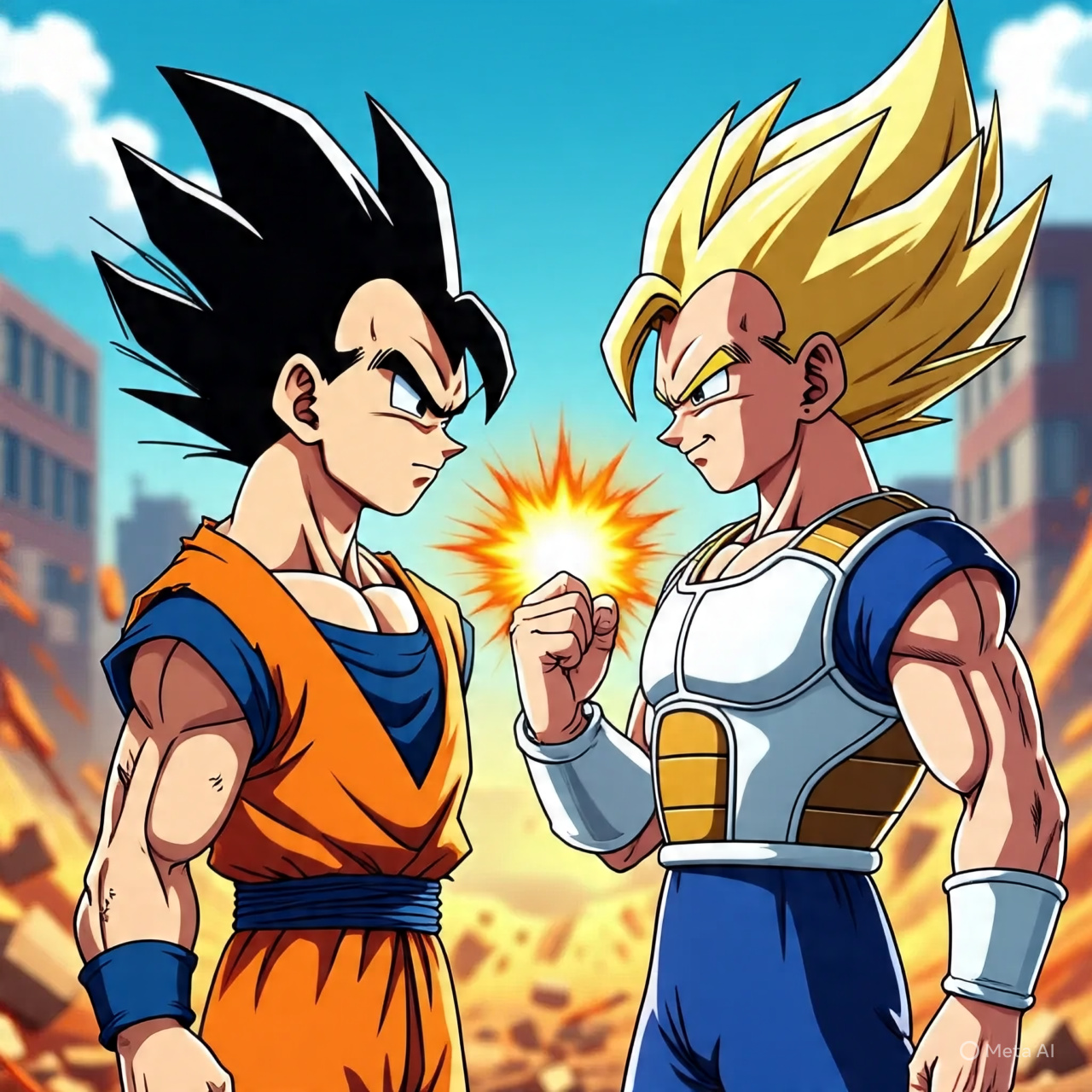
Play Dragon Ball Z – Supersonic Warriors (E)(Rising Sun)
Dragon Ball Z: Supersonic Warriors (Europe) – A High-Flying, Fast-Paced GBA Fighter
Introduction
Released in 2004 for the Game Boy Advance, Dragon Ball Z: Supersonic Warriors (European version by Rising Sun) brought the explosive battles of the Dragon Ball Z universe to handhelds in a unique, aerial-focused 2D fighting format. Developed by Arc System Works (later famous for Guilty Gear and Dragon Ball FighterZ) and published by Atari in the West, this title carved a niche among DBZ games by offering fluid controls, tag-team mechanics, and multiple storylines for each character.
While not as technically deep as console fighting games, Supersonic Warriors became a fan favorite for its faithful adaptation of DBZ combat dynamics — including mid-air brawls, beam struggles, and powerful transformations — all on Nintendo’s humble 32-bit portable.
Let’s dive into what made the European version of Dragon Ball Z: Supersonic Warriors a memorable and significant entry in the franchise’s gaming legacy.
Gameplay Overview
Unlike traditional grounded 2D fighters, Supersonic Warriors takes battles to the air, placing characters in wide-open spaces where they can dash, float, and fire energy blasts freely. The controls are intuitive, with fast-paced movement and simple combo execution, making it accessible for newcomers and addictive for DBZ fans.
Basic Controls
-
D-Pad: Move in eight directions
-
A Button: Ki blasts (hold to charge)
-
B Button: Melee attacks
-
L Button: Block
-
R Button: Dash / Evade
-
Select + Direction: Switch characters in team mode
Each character has three special attacks, mapped to input combinations (often involving holding a direction and pressing a button). These include:
-
Ki-based energy attacks (like Kamehameha, Galick Gun)
-
Physical specials (rush punches, teleports)
-
Ultimate attacks (require max Ki and sometimes unique conditions)
Game Modes
The game offers a variety of modes to keep players engaged:
1. Story Mode
One of the standout features is the “What If?” story arcs for each character. Instead of just retelling the anime’s story, Supersonic Warriors explores alternate timelines and scenarios:
-
What if Vegeta defeated Frieza and took over the galaxy?
-
What if Gohan turned evil after Cell’s defeat?
-
What if Frieza joined the Z Fighters?
Each character’s story contains multiple battles with text-based dialogue before and after. This mode is surprisingly deep for a GBA game and gives fans a fresh take on DBZ lore.
2. Z Battle Mode
Fight through a ladder of opponents with increasing difficulty. It’s your standard arcade mode where survival and efficiency count.
3. Challenge Mode
Unlock Z Points by completing combat trials. These points can be used to buy new team setups or special battle formations.
4. Training
Hone your skills, learn combos, and practice team coordination.
5. Link Battle (Multiplayer)
Using a GBA link cable, two players can battle in multiplayer. Each player needs a cartridge, but this mode delivers the full competitive experience and was a highlight for schoolyard battles.
Team-Based Combat
A major gameplay hook is the 3-character team system. Players select a team of up to three fighters and can switch characters mid-battle. However, this isn’t just for tag-ins — it’s strategic. Some characters heal slower, take more damage, or have unique synergy bonuses when paired with certain teammates.
For example:
-
Goku, Gohan, and Piccolo may gain a Z-Fighter synergy bonus
-
Ginyu Force members perform better together
-
Frieza + Cell unlock special dialogues or interactions
You can build teams that are balanced, power-heavy, or tactical — a level of strategy not often found in handheld fighting games of that era.
Roster
The character roster is generous for a GBA title, with more than 15 characters, each with unique move sets, transformation states, and story paths. Key characters include:
-
Goku (Base, Super Saiyan, SSJ2/3 depending on special)
-
Vegeta (Saiyan Saga, SSJ, Majin)
-
Gohan (Teen, Adult, Great Saiyaman)
-
Piccolo
-
Krillin
-
Trunks (Future, Sword)
-
Cell (Imperfect, Perfect)
-
Frieza (Final Form)
-
Majin Buu
-
Ginyu
-
Dr. Gero
-
Android 18
-
Broly (unlockable)
Each character plays differently: Broly is a tank with heavy damage and slow speed; Goku is balanced with strong ki attacks and combos; Frieza excels at ranged pressure but has low defense.
Graphics and Sound
The game’s visuals are impressive given the GBA’s limitations. Characters are well-animated sprites, capturing iconic DBZ poses, transformations, and attack animations. Explosions and energy beams are vivid and satisfying, mimicking the high-energy style of the anime.
The backgrounds are simple but atmospheric, taking players to familiar settings like:
-
The World Tournament arena
-
Namek
-
Kami’s Lookout
-
Hyperbolic Time Chamber
-
Capsule Corp
Music is composed in a classic GBA chiptune style, delivering upbeat and intense tracks that fit the fast-paced action. While not orchestral like later DBZ games, it gets the job done and evokes nostalgic feelings for players who grew up with the handheld.
Difficulty and Balance
The game offers a moderate challenge with scalable AI difficulty. Some boss fights in Story Mode (especially in alternate timelines) can spike unexpectedly, forcing players to learn timing, dodging, and proper character usage.
There’s a Rock-Paper-Scissors layer to fights:
-
Melee beats ki spamming
-
Ki spamming punishes slow bruisers
-
Speedsters outmaneuver heavy hitters
Transformation states, team dynamics, and strategic character switching are essential at higher difficulties or in multiplayer matches.
Reception and Legacy
When it launched, Supersonic Warriors received positive reviews from fans and critics for:
-
Unique aerial combat system
-
Fluid controls and movement
-
“What If” storylines
-
Surprisingly deep mechanics for a handheld game
Critics did point out a lack of content longevity, with limited unlockables once all stories are completed, and some unbalanced characters (e.g., Broly being overpowered).
Despite these issues, the game developed a cult following, especially in Europe, where Dragon Ball Z was hugely popular in countries like France, Spain, and Italy. The GBA version was successful enough to warrant a direct sequel, Supersonic Warriors 2, on the Nintendo DS, which built on this formula with tag-team attacks and new characters.
Today, Supersonic Warriors is still fondly remembered as one of the best portable DBZ games of its time, alongside Legacy of Goku II and DBZ: Buu’s Fury.
Dragon Ball Z: Supersonic Warriors (Europe – Rising Sun) stands as a stellar example of what the GBA could deliver when placed in the hands of a competent studio with a passion for the source material. With its unique take on DBZ aerial combat, engaging “What If” storylines, and accessible-yet-strategic gameplay, it remains a high point for anime fighting games on handhelds.
Whether you’re a die-hard Dragon Ball fan or a retro gaming enthusiast looking for a tight, pick-up-and-play fighting experience on the go, Supersonic Warriors deserves a spot in your collection.